Rethinking Office Spaces at DOWL: A New Philosophy for Employee Experience and Brand
A Shift in Office Space Philosophy
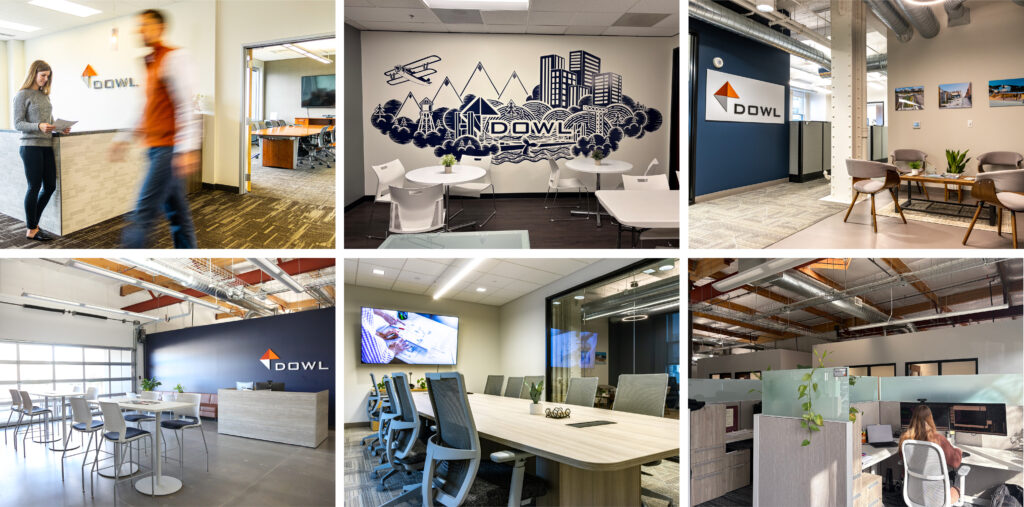
DOWL is embracing a new era in office space design, guided by a philosophy that places employee pride, well-being, and brand consistency at the forefront. According to Chief Administrative Officer Rachel Steer, the company is now opting for nicer spaces, Class A and B buildings, where employees feel proud to work. “It’s apparent to me that when we move into these spaces, employees walk a little taller,” Rachel said.
The second major shift is toward multi-tenant office buildings with attractive common amenities, such as conference rooms, coffee shops, restaurants, and fitness centers. While not every location can offer these features, DOWL actively seeks them out to enhance the workplace experience.
Sustainability is also now a key evaluation factor in DOWL’s office space decisions. The firm’s requests for proposals for new spaces always include questions about sustainability. As spaces are designed and furnished, there’s a strong emphasis on natural light, giving more employees access to windows, especially for those in cubicles or interior offices.
Space optimization is another priority. DOWL selects locations with basement or off-site storage to reduce costs and maximize investment in people and the spaces they use. “The company is no longer allocating large areas to print and production and is being thoughtful about actual conference room needs,” Rachel said. Reception areas are now smaller and more efficient, reflecting a modern, streamlined approach.
Brand Consistency Meets Local Character
Branding has become a central focus in office design. The DOWL marketing and graphics team, including Kimberlee Curtiss and Christina Shaw, partners closely with Rachel throughout the space planning process. Together, they select art, paint, furniture finishes, and design elements that adhere to DOWL standards while allowing each office to maintain its own unique character and vibe. “We aren’t cloning offices,” Rachel said. “We work closely with each office manager to find out what’s important to their group and make it consistent with the brand but also fitting for the local office.”
Kimberlee plays a vital role in interior design, focusing on finishes, wall paint, trim, office wall art, and furniture layout. Creativity shines in projects like the Bend office and custom kitchen booths in Eugene. Kimberlee often builds SketchUp models to visualize colors and schemes before final decisions are made, a process that’s both fun and collaborative. “I get a lot of emails from Rachel, asking me to pick out the fabric for this chair, or finishing of that cabinet. It’s really fun to do,” Kimberlee said.
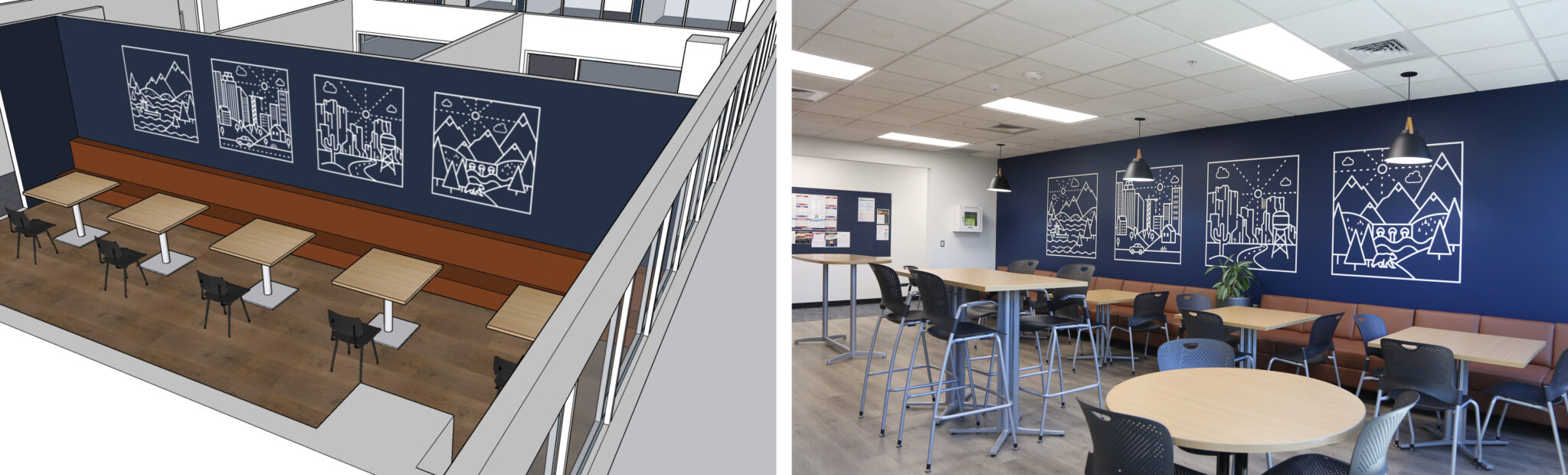
“We get consistency in brand and look by working with trusted vendors for finishes and furniture, while adapting to local needs elsewhere,” Christina added.
Hard-Earned Results
Feedback from staff has been overwhelmingly positive. Many offices were long overdue for a move, and the new spaces are seen as more appropriate for the DOWL brand. The process of finding, negotiating, and planning a new office space is extensive, typically taking about 18 months from search to move-in. In some cases, DOWL has had to extend leases due to market constraints.
Investment in office upgrades is significant, but the primary goal is to create places where staff want to be—a strategy that supports both recruiting and retention.
Both Rachel and Kimberlee emphasize that office design at DOWL is a thoughtful process, always considering the people who work there. “We try to keep what would make people happy in mind. People spend 40 hours a week in the office, they might as well enjoy it!” said Kimberlee.